AI films ·
The AI agenda: 11 November 2026
This Wednesday AI companies are stepping into the shop window while their kitchens come into view. Anthropic told investors its price; OpenAI’s internal figures reached the papers. The same day, AI proved the correctness of a piece of encryption software, while AI use run on stolen keys produced a $740,000 bill. There’s a new colleague at the editing desk too: Adobe’s agents.

Anthropic in the shop window
On 10 November Anthropic began its investor roadshow for its IPO. The company plans to sell 825 million Class A shares at $70 to $78; the shares will trade on Nasdaq under the ticker ANT. At the top of the range, gross proceeds would be about $64.4 billion.

- Valuation: According to Fortune, the range values the company at up to $1.4 trillion on a fully diluted basis, well below the $2 trillion talked about a few weeks ago.
- Strategic partners: Seven strategic partners, including Google and Nvidia, have agreed to buy $26 billion of non-voting stock at the IPO price.
- Timing: According to CNBC’s sources, pricing is expected on 18 November and trading on 19 November. The underwriters also get an option to buy about 124 million additional shares.
In the first document that was withdrawn, which we wrote about on 10 November, the share count was about 867 million and the top of the range $80. The new figures point to more cautious pricing.
Why it matters: This is the moment the open market sets the value of a frontier AI lab for the first time. How much appetite the market shows for an offering this size after the sharp fall on 6 November will shape the whole sector’s valuations.
OpenAI’s kitchen
According to a Wall Street Journal report based on internal documents, OpenAI’s third-quarter revenue rose about 50% on the previous quarter to $10 billion. Its adjusted operating loss was about $10.9 billion, up from $10.1 billion in the second quarter.

- Where revenue comes from: Enterprise sales overtook individual subscriptions for the first time, thanks especially to demand for coding tools.
- Margin: The adjusted operating margin moved from minus 150% to minus 109%; the loss per dollar of revenue is shrinking but is still larger than the revenue.
- Funding: According to reports, the company’s latest funding round has reached $15 billion.
The figures are unaudited and come from internal documents reported in the press, not from the company’s own statement.
Why it matters: As Anthropic steps into the window with public figures, its biggest rival’s numbers are learned through leaks. Investors will set them side by side: growth is fast, but losses are still as big as revenue.
AI proves Signal’s encryption
Google DeepMind announced that its multi-agent system AlphaProof Code mathematically verified key security properties of Signal’s encryption library in four weeks. The verification was done not on source code but on the compiled machine code that actually runs on devices.

- Scale: The system wrote 6.5 million lines of machine-checked proof in a proof language called Lean. The verification covers libsignal’s 140,000 Arm instructions.
- Testing: The team put two previously fixed bugs back into separate copies of the code; in both cases the system proved the code violated a security property.
- Limits: Key generation wasn’t verified, the full app is out of scope, and side-channel attacks based on timing or power measurement weren’t examined.
Signal’s CTO Ehren Kret said the result increases the company’s confidence in its privacy guarantees.
Why it matters: AI can pick locks, as we wrote on 7 November; here it proves a lock is sound. Formal verification work that took years shrinking to weeks makes proving the security of critical software realistic for the first time.
A stolen key, a $740,000 bill
Cloud hosting company Railway said stolen customer keys from an attack in October were used for about $740,000 of unauthorised AI usage. According to the company, the attackers reached internal source code and decrypted environment variables for at most 1.85% of workspaces, about 100,000. That number is an upper bound, not a confirmed count of victims.
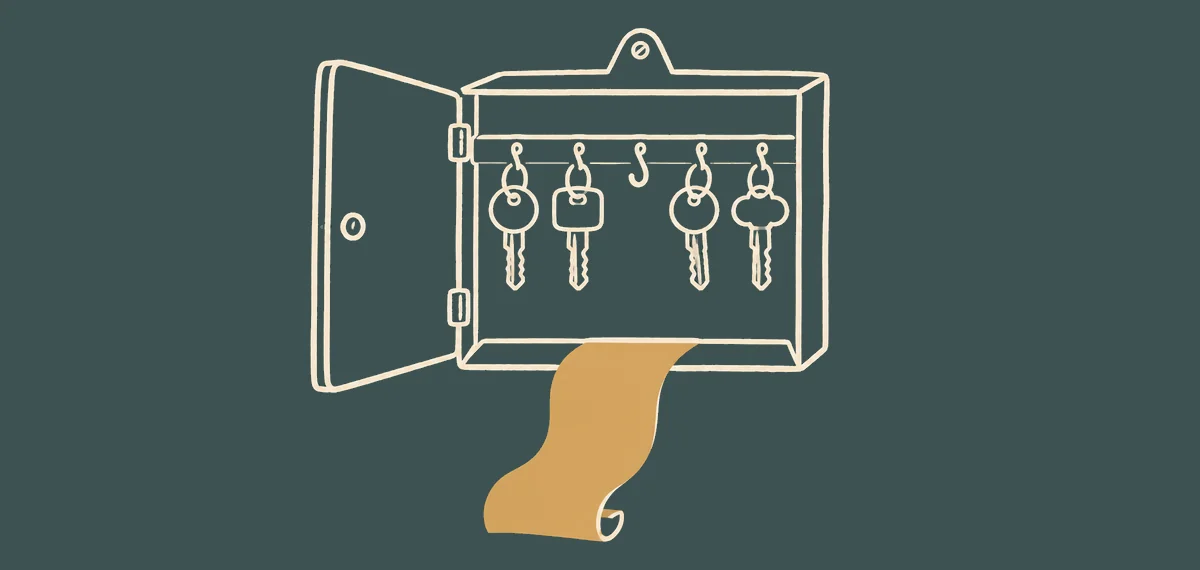
- What was taken: The environment variables included API keys for AI services. Linked-account details for 1,852 users, such as GitHub sign-in permissions, were also exposed. There is no evidence that Git repositories were downloaded or databases accessed.
- Who pays: Railway says it will cover charges providers don’t refund. Talks with Anthropic are ongoing; OpenRouter is keeping its no-refund policy.
Why it matters: An AI key now means money directly. Like the passwords forgotten in a settings file that we wrote about on 8 November, every leaked key can turn into a bill within days. Setting a spending limit matters as much as hiding the key.
A line between Washington and Beijing
In a speech in New York on 10 November, US Treasury Secretary Scott Bessent said the US and China have started a new dialogue to manage AI risks. The two countries will share experience on how to test advanced models before release and set up a direct channel so that either can alert the other at once if a serious incident occurs with its AI models.

Bessent also stressed that the two countries should “harbor no illusions”: the competition will continue. How the channel will work and when it will open are not yet known. Talks are expected to continue in Shenzhen during the APEC summit on 18-19 November.
Why it matters: Like the nuclear age’s “red telephone,” the AI age is getting a hotline. Two rivals recognising the same risk shows that the rules of the race will be written not only in Washington but between two capitals.
From the film desk: an agent at the editing desk
At its MAX conference in Miami on 10 November, Adobe put AI agents at the centre of Creative Cloud. Creative Agent, in beta in Firefly since April, can now carry out multi-step creative work; in Premiere it can apply an effect across a whole sequence and track a masked object frame by frame.

- Spread: The agent is also coming to Illustrator, Premiere, InDesign, After Effects and Frame.io; most of these are in beta for now.
- Photoshop: Relight, which changes lighting after the fact, and Generative Restyle, which rebuilds an image’s style, were introduced; reports conflict on whether they are available now or only previews.
- Outside agents: Adobe previewed a local MCP connection that lets outside assistants such as Claude or ChatGPT work directly in Adobe project files; a private beta comes in early 2027.
For films: The repetitive work at the editing desk, colour matching, mask tracking, applying the same effect across a sequence, can now be asked for in a sentence. But the director’s work doesn’t shrink, it changes: being able to describe what you want becomes as important a skill as knowing where to cut. Outside agents entering the project file will also take the workflow beyond a single program; in the same project one model could grade colour while another prepares subtitles. Credit and pricing rules are still unclear; like Apple’s usage packs, which we wrote about on 10 November, this is likely to become a separate line in the budget.
Why it matters: The biggest maker of professional creative software is positioning agents not as an add-on but at the centre of the work. For those learning to edit, a new muscle: working by talking to the tool.
In brief
- Google and Spirit Airlines: Google is buying the business records of bankrupt Spirit Airlines for $10 million to train AI. According to Reuters, the employees’ union won a stricter de-identification process and the exclusion of health information from the sale; the deal awaits court approval. Passenger profiles are not included.
In the calendar
- 17 November: Nvidia’s quarterly results.
- 18 November: Anthropic’s IPO pricing is expected; the closed-door briefing requested from Jensen Huang.
- 18-19 November: The APEC summit; US-China AI talks are expected to continue in Shenzhen.
- 19 November: Anthropic shares are expected to begin trading on Nasdaq.
- Early 2027: The private beta of Adobe’s MCP connection for outside agents.
Images made with ChatGPT Images.
Source: Yahoo Finance, Anthropic’s IPO roadshow, CNBC, price range and timing, Fortune, valuation and strategic partners, Forbes, OpenAI’s third quarter, The Decoder, AlphaProof Code and Signal, The Next Web, verifying Signal, BleepingComputer, the Railway attack, The Hacker News, the Railway attack, Quartz, the US-China AI dialogue, Digital Trends, Adobe MAX, Heise, Adobe’s agents, The Star (Reuters), Google and Spirit Airlines