AI films ·
The AI agenda: 2 November 2026
Today’s news tells the same story of tension: software gets a little faster every day, while the world that carries it can’t grow at the same pace. Memory chips are getting dearer, the power grid is under strain, and the courts are facing new questions.

Anthropic: a bigger quarter, a bigger warning
On 2 November Anthropic updated its IPO filing with third-quarter figures. Quarterly revenue came to about $17 billion, roughly 12 times the same quarter a year earlier. Revenue for the first nine months of the year reached $33.2 billion.

- Growth slowed: Quarter-on-quarter growth fell to about 47%, from 144% the quarter before.
- Profit turned to loss: The $974 million operating profit of the second quarter became a $567 million operating loss in the third.
- Commitments: Purchase and lease commitments total about $895 billion. The company says nearly all of it is for compute and infrastructure.
- The warning: A new risk factor in the filing says Anthropic “may imminently meet” its Responsible Scaling Policy’s definition of “dramatically accelerated progress attributable to AI.” The policy roughly defines this as a year bringing the progress that would normally take two. The company does not say any of its current models has crossed the threshold; it is considering new rules that would put some research decisions under human approval.
Why it matters: It is unusual for a company to tell investors, as a risk, that its own product may speed up its own research. The speed is in the software; the $895 billion in commitments shows that it has to be paid for in chips, concrete and electricity.
Apple: a record quarter, “unprecedented” memory prices
In John Ternus’s first earnings call as CEO, Apple reported revenue of $114.5 billion for the September quarter, up 12%. According to MacRumors, iPhone revenue rose 17% to $57.6 billion.

Ternus called memory prices “unprecedented” and said he expects them to keep rising beyond the December quarter. Apple guided to a gross margin of 45-46% for the December quarter, against an analyst average of 46.3%. CFO Kevan Parekh put this mainly down to memory costs and the costs of ramping up Siri AI. The stock slipped in after-hours trading following the release.
Why it matters: As AI data centres soak up memory, people buying phones and computers pay part of the bill. This is friction at its most concrete: the models running in the cloud affect the price of the device in your pocket.
OpenAI makes a promise to the grid
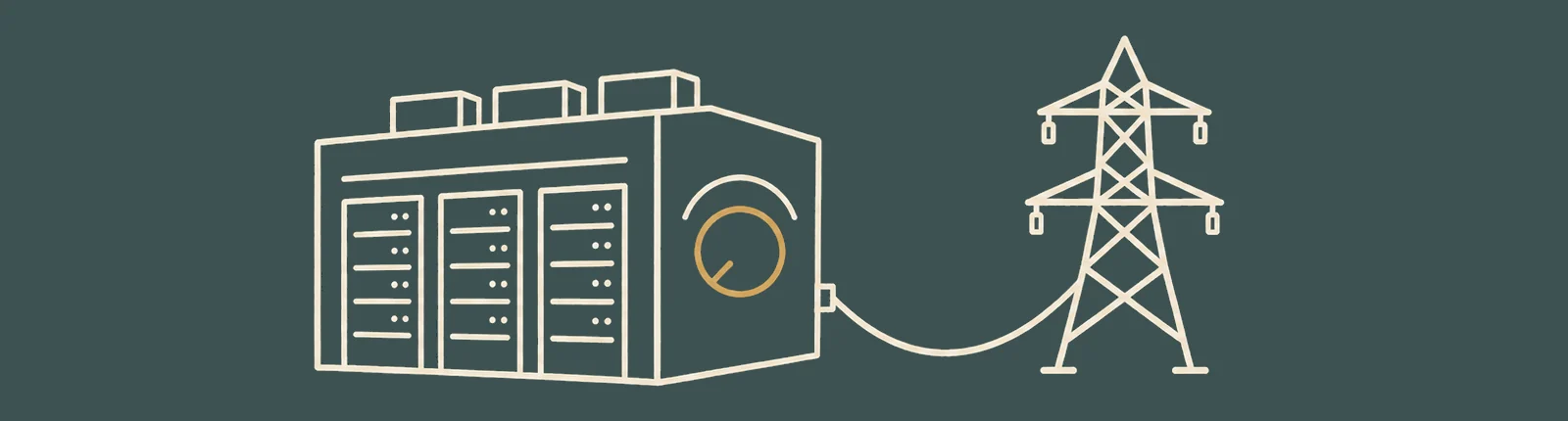
OpenAI announced a programme called Grid Protectors. New campuses the company builds will cut the power they draw when the grid is under strain. The first case is a planned campus of about 3.2 gigawatts in Effingham County, Georgia: under a 25-year contract with Georgia Power, the utility can reduce the power delivered to the site by up to 1,000 megawatts at peak times. OpenAI itself acknowledges that this flexibility can’t replace new power plants and transmission lines.
The same day, the company signed four agreements in Abu Dhabi:
- Energy: The state oil company ADNOC will use OpenAI’s agent-building platform Frontier together with G42.
- Government: An initiative began to turn regulations into a form AI can read. So far the only named live pilot concerns food imports.
- Investment and adoption: Investment analysis with Mubadala, and a five-year deal with G42’s Inception42 across government, business and education.
Abu Dhabi aims to become “the world’s first AI-native government.”
Why it matters: Data centres are no longer only an engineering question but a neighbourhood one too. A major lab offering, unprompted, to step back on electricity shows how heavy local objections have become.
Goldman hands the tools back to engineers
According to Bloomberg, Goldman Sachs has limited Claude Code and GitHub’s advanced coding tools to engineers; most bankers and traders can no longer use them. The decision came through internal guidance updated in October, citing productivity and risk management.

In July the bank was praising non-technical staff for “vibe coding” their own tools. Nor has it given up on AI: general tools remain open to employees.
Why it matters: In a world where anyone can write code, the real question is who checks it. In tightly regulated industries, the answer for now is “engineers.”
Newspapers sue Brave
The New York Times, the New York Daily News, the Chicago Tribune and the Orlando Sentinel have each sued Brave Software in federal court in Manhattan.

- Paywalls: The papers say Brave’s browser makes it easier for users to get around paywalls.
- AI: They allege that the company sells the content it collects to AI companies through the Brave Index.
- The crawler: They claim Brave doesn’t identify its web crawler or give publishers a way to block it.
The allegations have not been tested in court; at the time of the reports, Brave had not responded publicly.
Why it matters: While big companies try to agree on shared rules for training data, how content is collected today is still a matter for the courts. These suits show how hard the bargaining between publishers and AI has become.
From the film desk
Memory prices and data-centre bills also reach people who make AI films: the hardware needed to run models locally gets dearer, while quotas for cloud generation may tighten. The newspapers’ case against Brave is another reminder: as courts argue over what a model was trained on, knowing the licence terms of the tool behind every frame delivered to a client becomes part of the job.
In brief

- iQIYI: It opened a 110-square-metre studio in Shanghai that it calls “China’s first AI film studio.” Shooting on the first film, Cop in Trouble, began on 28 October; footage from the set flows straight into the company’s AI-assisted post-production platform.
- South Korea: October exports rose 93.7% to $115.3 billion. Semiconductor exports jumped 259% to $56.4 billion, nearly half of the total.
- OpenAI: From December, ChatGPT and Codex will draw from the same usage allowance on Plus, Pro and Business plans. Ordinary chats with Instant won’t count against it.
Images made with ChatGPT Images.
Source: Quartz, Anthropic’s amended filing, Gizmodo, the acceleration threshold, Apple, fourth-quarter results, MacRumors, Apple’s quarter in detail, CNBC, Apple and memory costs, The Next Web, Grid Protectors, The National, ADNOC and OpenAI, Al-Monitor, OpenAI’s Abu Dhabi deals, Bloomberg, Goldman Sachs, TheWrap, the Brave lawsuits, PR Newswire, iQIYI, The Korea Herald, October exports, Notebookcheck, the ChatGPT and Codex allowance