AI films ·
The AI agenda: 9 November 2026
This Monday’s news comes together in one word: trust. The board of the world’s most valuable chip company is investigating its own CEO. The US President opens the door to rules for AI, while the independence of the safety institute is in question. Coding agents leave real work unfinished far more often than expected, and a company that runs models loses its customers’ data. On the film side there is a new question: who can change the words spoken in a livestream, and the lips that speak them?
Nvidia’s board investigates its CEO
In a letter to employees on Sunday, Nvidia CEO Jensen Huang acknowledged a relationship with Alice Huang, an executive at the Singapore-based company Megaspeed: “I was unfaithful to my wife.” The same day, Nvidia’s board announced that a committee of independent directors, assisted by outside independent counsel, will investigate the matter.
- Background: In the report we covered on 31 October, the New York Times said US intelligence suspected Alice Huang of gathering information for China and that the White House had been briefed. According to reports, US intelligence assesses that she was recruited by China’s Ministry of State Security to target Jensen Huang. The two Huangs are not related.
- The board’s statement: The board said it has no reason to believe national security or Nvidia’s secrets were compromised, and that it has confidence in Huang and his leadership team. Huang wrote that he supports the investigation and will cooperate fully.
- The market: According to Bloomberg, Nvidia shares fell 4.3% on Monday, taking close to $200 billion off its market value.
- Congress: The request from three House committee chairs we wrote about on 6 November stands: Huang was asked for a closed-door briefing on 18 November, with 11 November as the deadline to reply.
This is not a private-life story but a corporate-security one. Megaspeed is a cloud customer already under investigation on suspicion of routing Nvidia chips to China; Nvidia says the allegations that chips were diverted to China were investigated and debunked last year. No one has been charged with anything.
Why it matters: The trustworthiness of the person running the company that makes AI’s most critical hardware is now a matter not only for investors but for national security agencies. The outcome of the investigation could also affect how much tighter US chip export rules become.
Trump: “I don’t mind guardrails”
In a 60 Minutes interview broadcast on Sunday evening, US President Donald Trump said the risks of AI can be managed, that the Justice Department is handling it, and that he doesn’t mind “guardrails” for AI. His one condition is that the rules don’t put the US in “a deep second position” behind China. Trump suggested he was open to working with Democrats on safeguards but didn’t say which ones he would sign.

One more line in the interview stood out: Trump described telling the head of “one of the big” companies, reported for “doing something bad with AI,” to get ready to go to jail. Neither the company nor the person was named.
The same weekend, AP reported, citing two former officials, that staff at CAISSI, the AI safety centre under the US Commerce Department, had been asked to report informally to a White House office. According to the report, the institute has no permanent leader and hasn’t published a public safety report since August. The White House did not answer the questions directly; it pointed out that Trump had set up a “Super Intelligence Force.”
Why it matters: After the election, rules in Washington now look almost certain; the real question is who will write them. A structure tied to the White House and the Justice Department’s new task force, rather than an independent testing body, could turn safety from a scientific assessment into an executive decision.
Agents finish a quarter of the jobs
A test called Co-Design Bench, built by researchers from Alibaba and five universities, put coding agents to work on real user requests. According to The Decoder, the best performer was GPT-6 Astra, but it fully completed only 26.4% of the tasks.
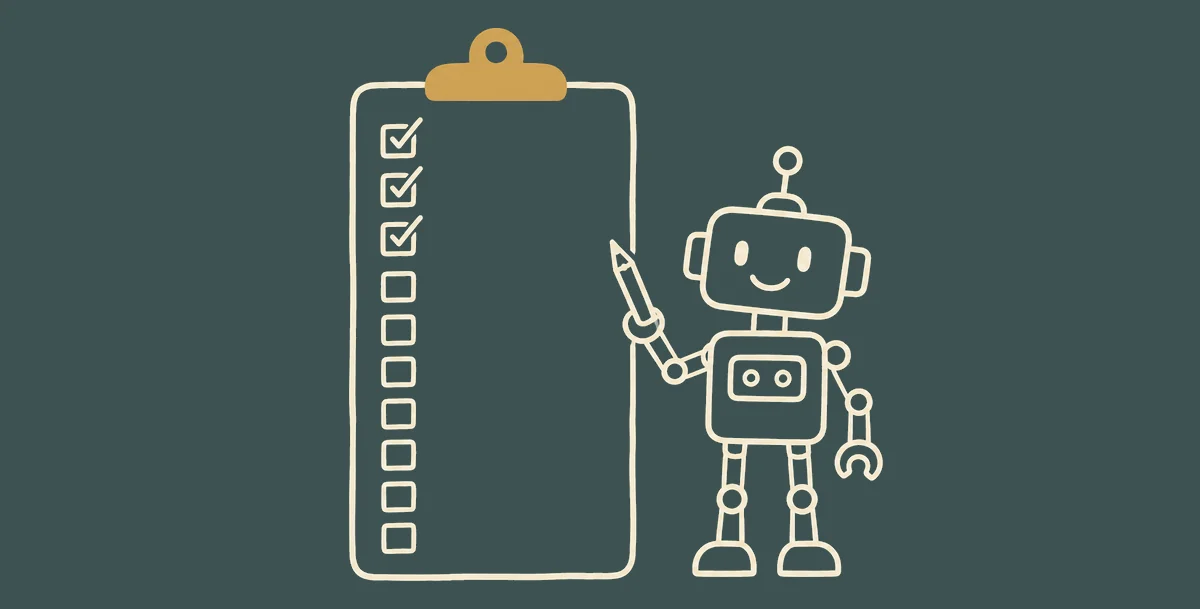
- Method: The researchers built 273 tasks from real coding sessions and 2,331 hidden acceptance criteria for them. The tasks were chosen from requests that had tripped up agents before.
- Result: The best model met an average of 70% of each task’s criteria, but finished the whole job in only one task out of four. The same models score above 99% on older tests.
- Limits: The work hasn’t been peer reviewed yet. Alibaba tests its own model, Qwen, too. Each task has a single request; the agent can’t ask questions and the user can’t correct it along the way.
Why it matters: Agents now do “most of it”; but the last 30%, the part that finishes the job, is still human. For a team working with agents, the most valuable skill is spotting quickly what’s missing.
An infrastructure company loses customer data
Fireworks AI, which runs AI models on behalf of companies and counts Nvidia among its investors, said the attack it suffered was wider than first disclosed. According to Forbes, the attackers reached some customers’ account and billing details, secret keys, datasets and unfinished models.

- Two attacks: The company first spotted unauthorised use of internal credentials on 6 October. The second attack came through an incident on 23 October at an outside cloud provider hosting its research machines.
- Who was affected: Fireworks says it has more than 10,000 customers and is working with those affected, including Notion and Cursor. Notion said fewer than 1% of its workspaces were affected and that some Notion AI chat records may have been exposed. Two customers told Forbes they had moved a substantial part of their business elsewhere.
- Who wasn’t: According to the company, inference services that keep no data by default were not affected.
Why it matters: Most users don’t know that when they use an AI product, their data sits not only with that product’s company but also with the infrastructure provider behind it. The chain of trust is only as strong as its weakest link.
From the film desk: whose words, voice and lips?
A Microsoft patent application published in the US describes an AI system that changes a livestream speaker’s words in real time and redraws their lip movements to match the new words. According to TechSpot, the system could change the words by the viewer’s age or language, strip out pauses and filler words, and censor swearing. Microsoft says the application is for cleaning up and translating broadcasts. It is not a product but an application that hasn’t been granted.

The same weekend, two lawsuits were filed in music. Elvis Presley’s rights holders allege that the AI music generator Suno trained its model on Presley recordings and lets users create new songs in a voice listeners recognise as his; the suit also relies on Tennessee’s ELVIS Act, which bans copying an artist’s voice without permission. Eight Mile Style, which holds the rights to many of Eminem’s works, alleges in a separate suit that Suno used 269 of his compositions. According to Engadget, the Presley rights group recently also sued Anthropic, seeking $41 million in damages. Suno has not responded yet.
For films: What the patent describes is a tool dubbing and translation have long waited for: an actor speaking Turkish could have lips that move in Turkish too. But the same technology can make someone appear to say words they never said. That is why the labelling rules in Europe we wrote about on 8 November matter. The Suno suits draw another line: the timbre of a voice and the expression of a face are now protected as seriously as copyright. For anyone making films with AI the lesson is simple: take permission for voices and faces as seriously as music licences.
Why it matters: As changing images gets easier, what becomes valuable is being able to prove who agreed to what. Consent and provenance are becoming documents that need protecting as much as the film itself.
In brief
- DeepSeek: According to Bloomberg, DeepSeek’s open-source agent app Harness reached 1.54 million daily active users less than three months after its 13 August launch; about 92 trillion tokens a day are used in the app. The figures are the company’s own and haven’t been independently verified.
- Google: The company introduced TPU 8tx, for working with confidential data, and TPU 8i Max, which pairs two chips for very long contexts. According to Google, its TPUs now have close to 100 customers; the new systems are expected in 2027.
In the calendar
- 11 November: The deadline for Jensen Huang to reply to the House committees’ request for a briefing.
- 18 November: The date of the closed-door briefing the committees asked Huang for.
- 2027: Google’s new TPU 8tx and TPU 8i Max systems arrive.
Images made with ChatGPT Images.
Source: NBC News, Nvidia’s investigation, Axios, Jensen Huang’s letter to staff, Bloomberg, the board’s statement, CBS News, transcript of the Trump interview, Yahoo Finance (Reuters), Trump and guardrails, PBS (AP), CAISSI and the White House, The Decoder, Co-Design Bench, Qodo, details of the test, Forbes, Fireworks AI, The Hacker News, Fireworks and Notion, TechSpot, Microsoft’s patent application, Variety, the Suno lawsuits, Engadget, the Suno lawsuits, Deccan Chronicle (Bloomberg), DeepSeek Harness, Google, TPU 8tx and TPU 8i Max, US House Select Committee on China, Jensen Huang